
Supporting survivors of sexual and gender-based violence (SGBV) can be emotionally demanding. For those doing the work, listening to difficult experiences, responding to survivors, and working in challenging environments can also take a toll on their mental health.
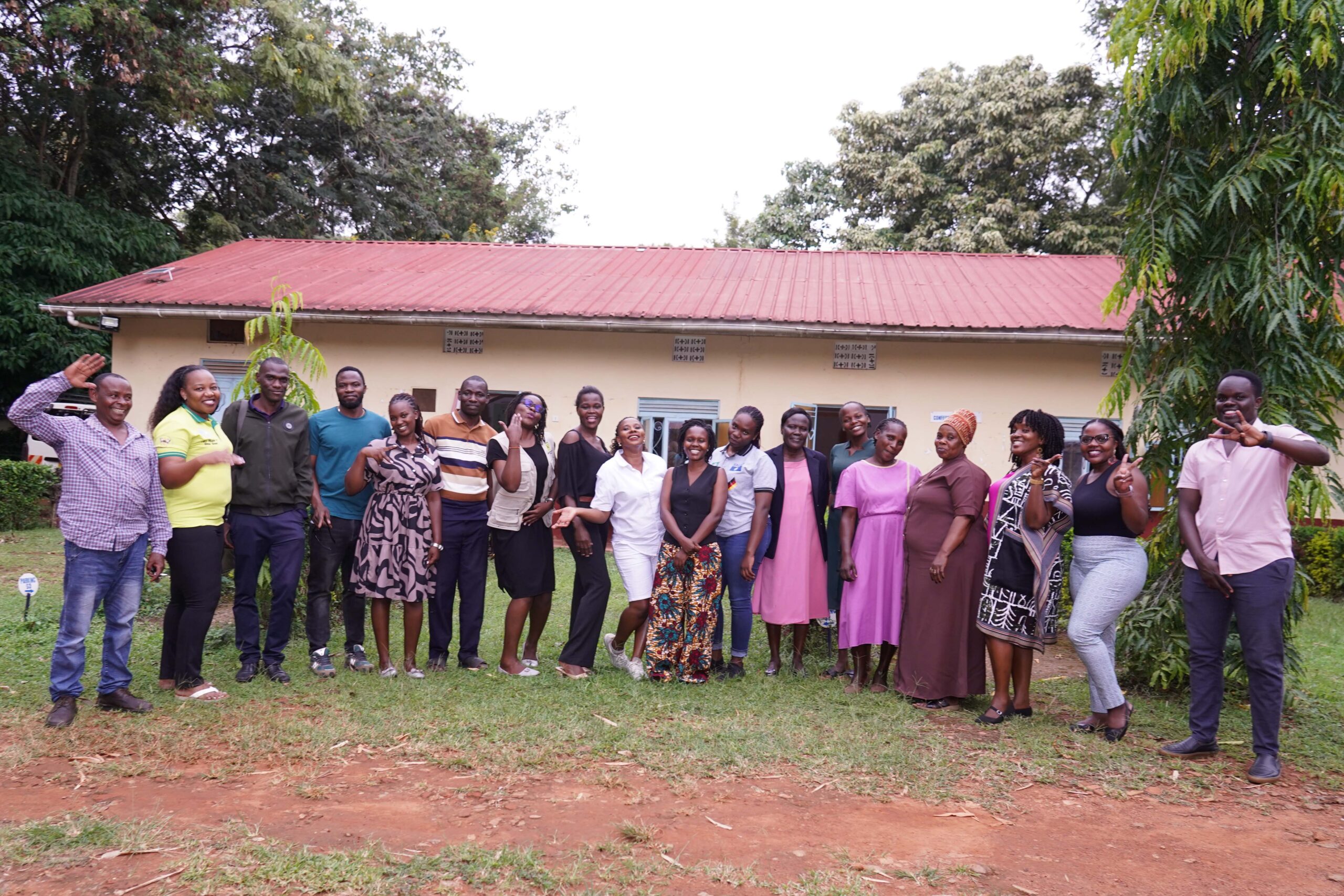
To strengthen survivor support while also recognising the wellbeing of the people providing that support, the Uganda Youth and Adolescents Health Forum (UYAHF), together with Salem Brotherhood, held a two-day training on Stress- and Trauma-Sensitive Response to SGBV Survivors on 6th and 7th August 2026 at Salem Brotherhood in Mbale. The training brought together 20 participants, 14 women and 6 men, and was facilitated by Lillian Nalwoga, Senior Programmes Manager and Sharon Ochola, Communications Officer at MEMPROW.
The training was designed to strengthen a survivor-centred response while also recognising the wellbeing of the people and organisations providing that response. The STA offers a practical lens for understanding how violence affects individuals and collectives, and how ordinary interactions can either reduce distress or unintentionally intensify it. It also places trauma within social and political realities, including unequal power relations and the structural conditions that sustain violence against women and girls.
Day One: Starting with understanding stress
The training started with the trainers setting the mood, building trust, and checking in on how the participants were fairing that morning.
Participants shared the stories behind their names, their roles, and what they hoped to gain from the training.
Safety and connection were linked to trust, respect, friendly interaction, freedom of expression, genuine engagement, and the ability to make decisions. Participants also identified clear explanations, practical scenarios, learning from one another, and a non-judgmental space as important to feeling empowered.
The conversation then moved to stress.
Participants explored stress as a physical, emotional, cognitive and behavioural response that can occur when demands feel greater than the resources available to deal with them. Through reflection and group exercises, they considered what gives them energy, what drains them, and the personal, organisational, and systemic pressures that can affect their work. The balloon exercise and stress continuum made it possible to discuss the difference between thriving, surviving, struggling and being in crisis, while also recognising that stress levels change and that people respond differently to the same situation.
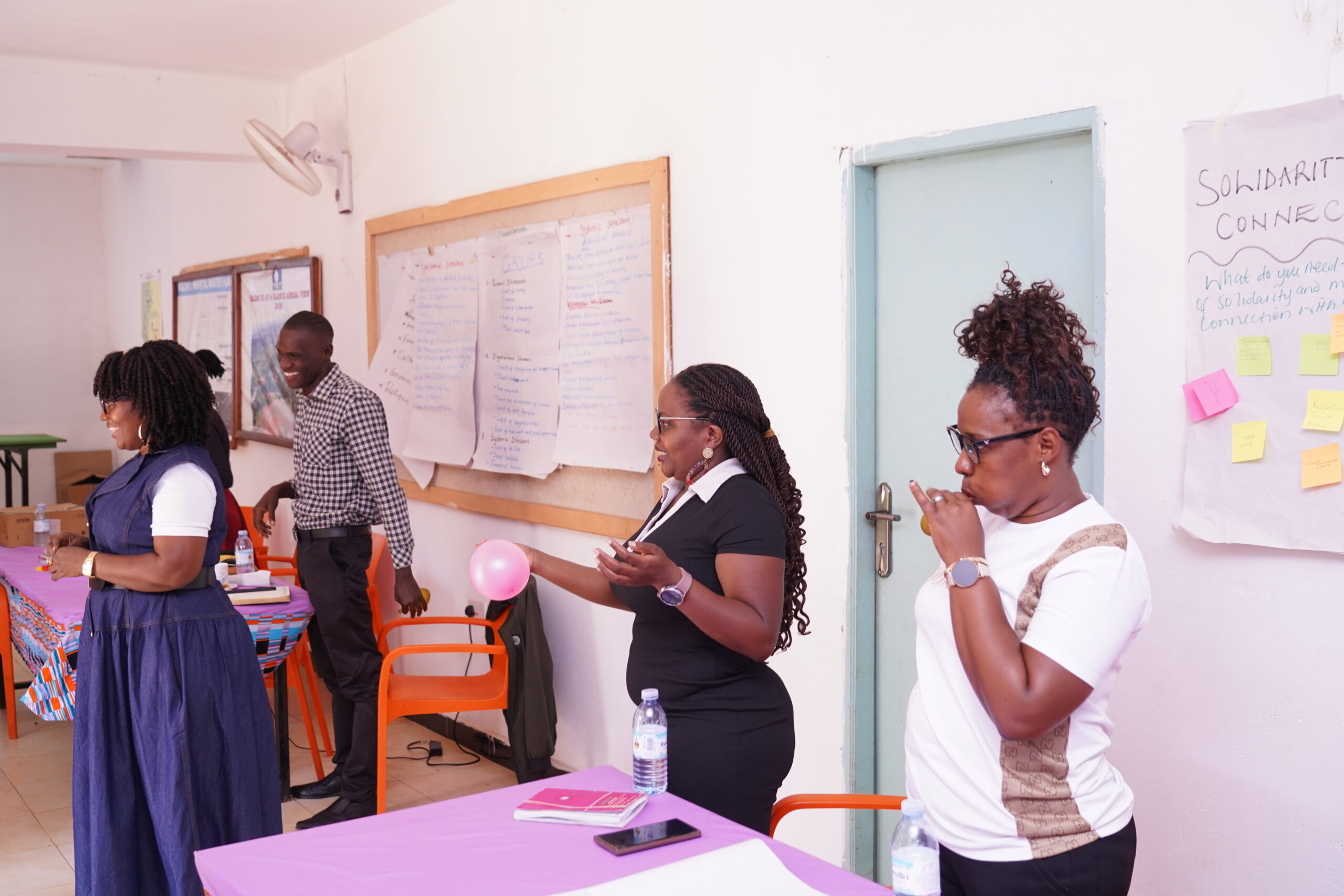
For Susan Atim from UYAHF, one source of stress can be found in the everyday demands of work.
“When assigned a role that you don’t have adequate knowledge to, you have to go and do research and consultation to accomplish your task, which becomes a personal stressor.”
Susan’s reflection helped connect the discussion to the realities participants encounter in their own work.
The conversation then moved deeper, from everyday stress to traumatic stress.
The session distinguished trauma from ordinary stress. Trauma was discussed as a response to events involving severe threat, violence, helplessness, powerlessness, or loss of control. Participants examined common trauma reactions, including re-experiencing, avoidance, hypervigilance, intrusion, emotional overwhelm, dissociation, negative beliefs about oneself, and difficulties in relationships. Triggers were explored through the senses, emotions, thoughts, memories, and body sensations.
One of the tools introduced was the Window of Tolerance, which helped participants understand what happens when a person moves outside a manageable emotional state. They practiced grounding techniques using breathing, body awareness and the five senses as ways of helping someone regain a sense of stability. Participants also discussed how a traumatic stress reaction may continue even after danger has passed, affecting memory, alarm systems, sleep, energy, and the ability to feel safe.
The learning was then connected directly to supporting survivors.
Participants discussed why a survivor should not be rushed, why body language matters, and why the way questions are asked can either create safety or add to someone’s distress. They were reminded that a survivor’s response may be a protective or survival strategy, and that the role of the helper is not to force disclosure or compliance, but to reduce stress, restore choice and protect dignity. The trainers cautioned the participants to always be mindful of the four principles of safety, empowerment, solidarity and connection, self-care and collective care.
Day Two: Applying the learning
Day Two began with a recap of the previous day’s discussions and a Wellness Barometer. Participants revisited the Window of Tolerance, stress and trauma, triggers, survivor-sensitive environments and the calming and activating exercises they had practiced.
The group then went deeper into the four principles of the Stress and Trauma-Sensitive Approach and how they could be applied beyond counselling or case management.
Through role plays and practical group work, participants considered what safety, connection, empowerment and care could look like in real interactions with survivors. Safety, for example, could mean providing clear information, ensuring confidentiality and creating suitable spaces. Empowerment meant restoring voice, choice and control, while connection meant creating supportive relationships rather than allowing people to navigate difficult experiences alone. Solidarity and connection: Create spaces for exchange and connection; support individuals to make other supportive connections. Self-care, staff care and collective care: promote self-care for both the survivor and helper. Protect wellbeing through individual and collective practice.
But the training was not only about the people receiving support.
It also asked an important question: what happens to the people providing that support?
When the work starts affecting the helper
The training examined how repeated exposure to distress can affect helpers and teams. Secondary trauma may appear through intrusive thoughts or dreams, heightened alertness, sleep difficulties, avoidance, hopelessness, or changes in relationships with colleagues and clients.
Participants explored secondary trauma, compassion fatigue and burnout, and how repeated exposure to distressing experiences can affect helpers and teams.
Secondary trauma can involve intrusive thoughts or dreams, heightened alertness, sleep difficulties and changes in relationships. Compassion fatigue may appear as emotional exhaustion, isolation, apathy or loss of joy, while burnout can develop from prolonged stress and frustration.
The discussion made one thing clear: individual coping cannot carry the entire burden.
Supportive supervision, safer workloads, team reflection, clear policies and spaces where staff can connect and process difficult experiences are also part of creating a trauma-responsive organisation.
This idea came alive during the Care Tree exercise.
Participants mapped out the different layers of care around their work. The roots represented daily self-care, the trunk represented staff-care structures and practices, while the branches represented how colleagues care for one another and remain connected. The exercise encouraged participants to think about both the strengths they already have and the gaps that still need attention.
Then came the final exercise
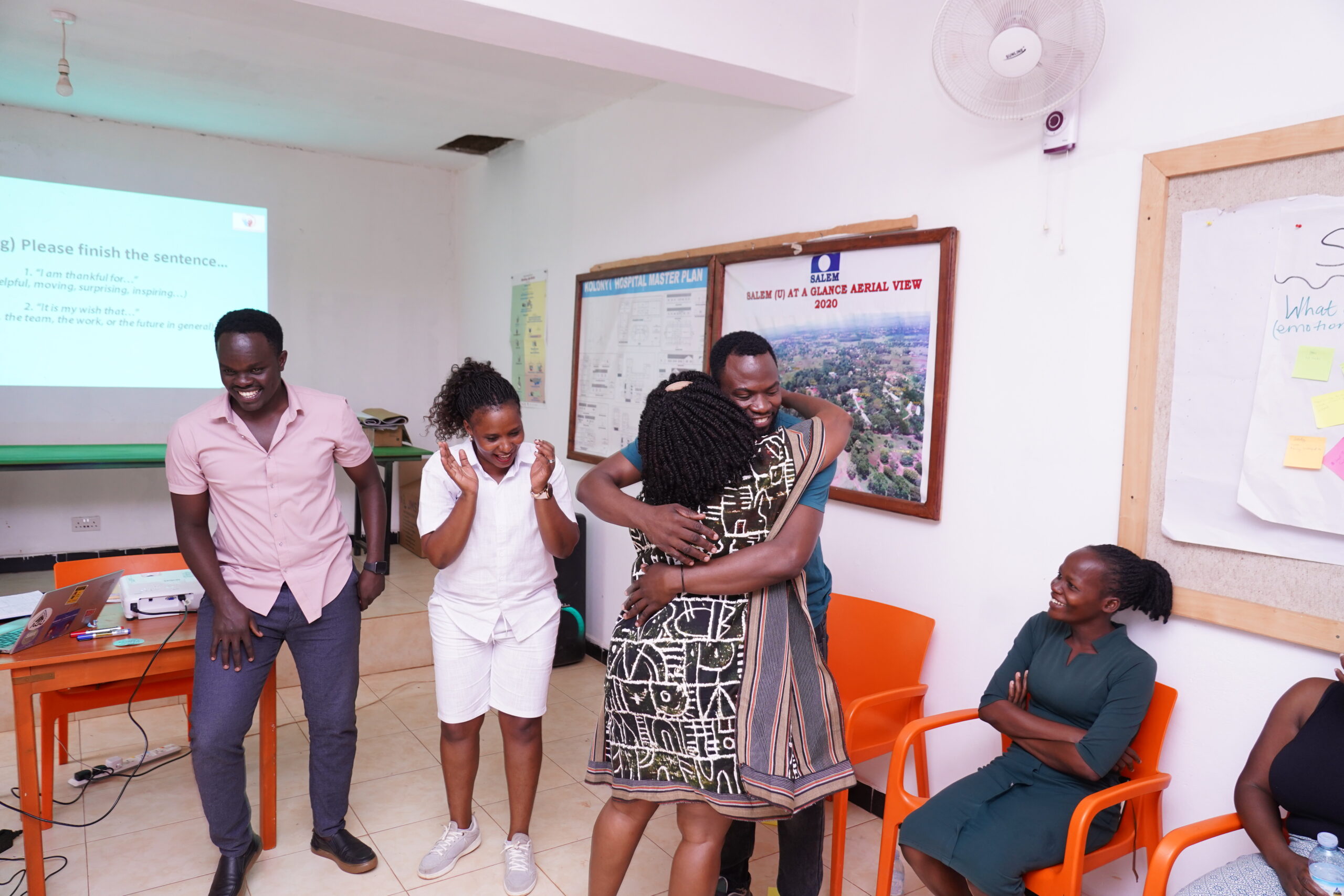
As the training neared its close, participants were invited to reflect on what stood out to them and what they would carry forward into their work.
Trigger warning.
During this final exercise, one participant shared an example of how people have to leave/cope with traumatic experiences.
She spoke about encountering rebels and witnessing severe violence over 20 years ago. She recounted that in her younger years, she observed the killing of one of her friends at the hands of the rebels. She observed her own demise, and the rebels instructed her to excavate the grave and bury her. She implored them not to force her into this act, and she narrowly escaped her own death as well. What saved her was her helping a certain couple deliver their baby, and the father of this baby was among the rebels who happened to be at the scene at the right time. She was pardoned and instructed to walk home in the wee hours of the night.
The experiences have never completely left her.
She explained that she does not want to return to Terego because returning would mean confronting places connected to those memories and places where people were killed and buried, and where she experienced events that remain difficult to forget.
It was a quiet but powerful moment.
For two days, participants had been talking about trauma, triggers, the body’s response to danger, and the ways difficult experiences can remain with a person long after the immediate danger has passed.
Now, someone in the room had put those ideas into a lived experience.
The story brought the training back to one of its most important lessons: trauma does not necessarily end when the situation ends.
And neither does the responsibility to respond with care.
Lillian also reminded participants that being trauma-sensitive does not mean the person providing support is unaffected. When a survivor becomes emotional, the helper does not need to rush them through the moment. They can stay present, help the survivor breathe and ground themselves, and allow them time before continuing.
But helpers have limits too.
If listening to a survivor’s experience becomes overwhelming, it is also okay for the helper to ask for a break, regain their composure, and return when they are ready.
Taking a break is not abandoning the survivor. Sometimes, it is part of creating safety for both people.
A different understanding of stress and trauma
By the end of the two days, participants had not only gained a shared understanding of stress and trauma, but had also practiced how that knowledge could shape their everyday interactions with survivors, colleagues, and themselves.
One participant captured this change in perspective:
“Before the training, we were still ‘green’ in our understanding of stress and trauma and often treated it as something simple. I now appreciate it differently.”
The participant also highlighted the value of the trainers’ connection with the group, the practical exercises, and active participation in helping make the learning meaningful.
The training closed with participants reflecting on what they wanted to take back into their work.
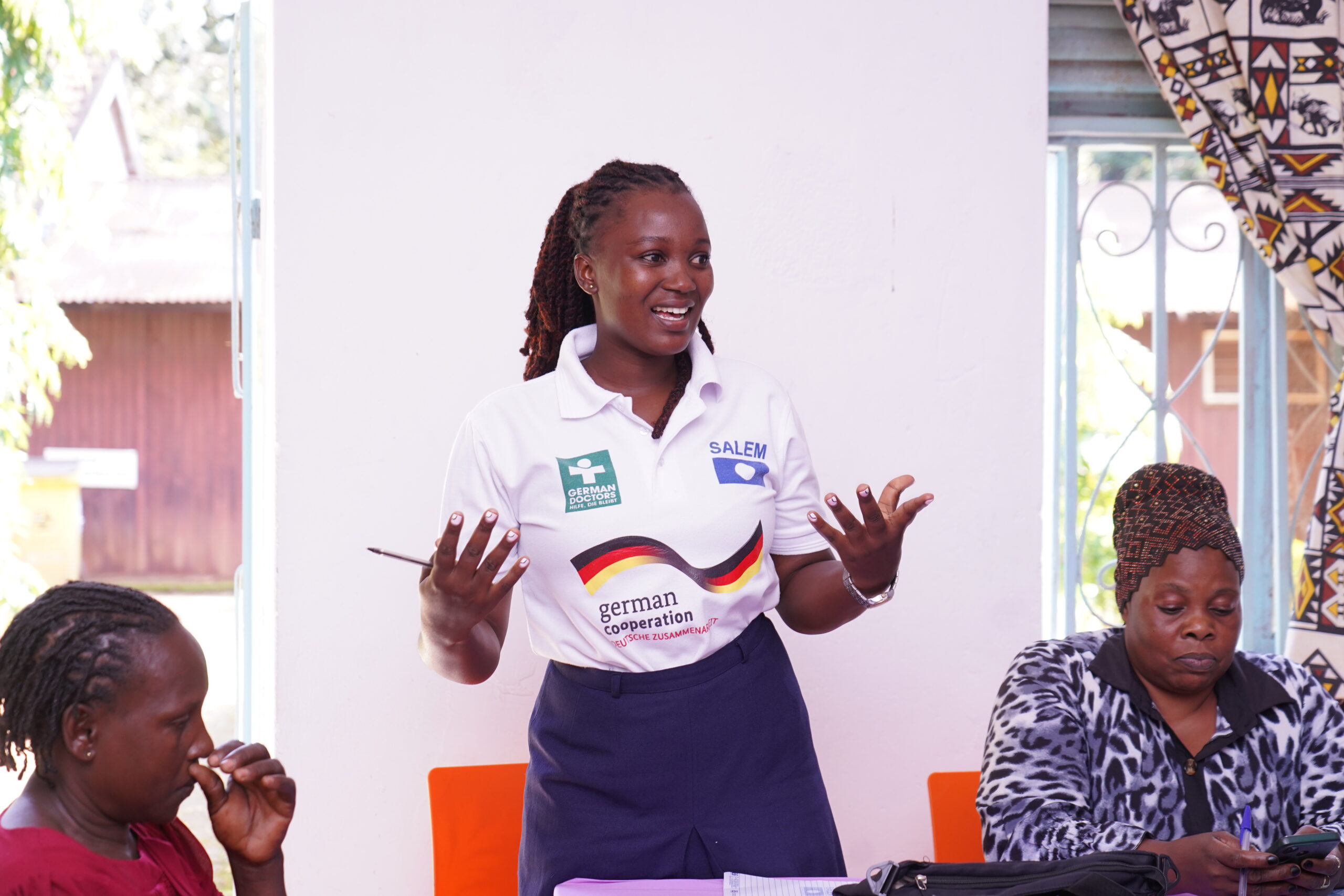
For UYAHF and Salem Brotherhood, the next step is not simply remembering what was discussed in the training room. It is finding ways to make these principles part of everyday practices, from how questions are asked and information is shared, to how survivors are given choice and how staff is supported when the work becomes difficult.
Because supporting survivors requires more than good intentions.
It also requires people who are supported enough to keep doing the work.
Authored by: eochieng@uyahf.com
